| Direction: Choose the best answer. |
| 1. Your boss will send you to an international seminar overseas. You are worried about your little puppy at home. You ask your neighbor, "________________" |
| |
1. Are you fond of taking good care of a little puppy? |
2. Would you please look after my puppy while I'm away? |
| |
3. Could you encage my little puppy, please? |
4. How about feeding my puppy while I am angry? |
| |
|
|
| 2. You're interested in taking a GAT preparation course at a tutorial school, so you call its office for more information about the tuition fee. You ask, "____________" |
| |
1. Could you tell me about the GAT preparation course fee, please? start? |
| |
2. Would you mind telling me more about your tutorial instructors, please? |
| |
3. When does the English course |
| |
4. How do you find the tuition fee of the English course? |
| |
|
| 3. Mr. Martin visits Bangkok for the first time. He wants to go to the office of Tourism Authority, so he decides to ask a woman waiting for her bus, "______________" |
| |
1. By the way, where can I get to the Tourism Authority Office, please? |
| |
2. Please listen carefully, would you mind directing me to the Tourism Authority Office, please? |
| |
3. Attention, please? Where can I catch the bus to the Tourism Authority Office, please? |
| |
4. Excuse me, could you please tell me how to get to the Tourism Authority Office? |
| |
|
| 4. While waiting in a long queue at the supermarket, you realize that you have forgotten to get something you need for dinner. It will take you only a minute to pick it up and you don't want to imagine returning to the end of the queue after that, so you turn to the person behind you and politely ask: "____________________________" |
| |
1. Do you need anything else? I'm going to get some more biscuits. |
| |
2. This queue is horrible! Why is everybody shopping at this time? |
| |
3. Could you hold my places, please? I've forgotten to get something. |
| |
4. Could you possibly let me go in front of you? I'm late for dinner. |
| |
|
5. You tell your close friend to be more patient with his important project which needs more time to be finished. You say, “___________” |
| |
1. Strike while the iron is hor. |
2. All work and no play makes Jack a dull boy. |
| |
3. Time and tides waits for no man. |
4. ) Rome wasn't built in a day. |
| |
|
|
| 6. I noticed that the children were ____________ to clean the garden after my offering them a cake for the job. |
| |
1. motivated |
2. motivating |
| |
3. motivation |
4. being motivated |
| |
|
|
| 7. She was driving at a very ___________ speed, so the accident was __________. |
| |
1. high, inevitable |
2. high, inevitably |
| |
3. highly, inevitable |
4. highly, inevitably |
| |
|
|
| 8. Unlike _________ rural areas, the crowded streets in urban areas are always filled with interesting people. |
| |
1. quiet |
2. quietly |
| |
3. to be quiet |
4. being quiet |
| |
|
|
| 9. The price they asked for the car was __________, so we bought it without much thought. |
| |
1. reason |
2. reasoning |
| |
3. reasonable |
4. reasonably |
| |
|
|
| 10. Kelly's guitar playing is pretty good, but he sings so ____________ that I just wanted him to stop. |
| |
1. bad |
2. badly |
| |
3. very bad |
4. very badly |
| |
|
|
| 11. Just as you think the main characters are going to live ___________ ever after, the film takes an unexpected twist. |
| |
1. happy |
2. happily |
| |
3. and happy |
4. happiness |
| |
|
|
| 12. Because the weather conditions are favorable, the farmers expect their crops to grow ___________. |
| |
1. being quick |
2. to be quick |
| |
3. quick |
4. quickly |
| |
|
|
| 13. She looked at me __________ when I gave her the news that she had passed the exam. |
| |
1. happy |
2. happily |
| |
3. and happy |
4. to be happy |
| |
|
|
| 14. Because I had missed quite a few classes due to my illness, I ___________ very hard for my exams in order to make up for what I'd missed. |
| |
1. used to study |
2. had to study |
| |
3. would rather study |
4. will have studied |
| |
|
|
| 15. I feel terrible. Something we ate at the restaurant ____________ me sick. |
| |
1. must have made |
2. would make |
| |
3. should have made |
4. had to make |
| |
|
|
| 16. We had been warned that out flight might be delayed this morning, but the pilot ___________ take off despite heavy fog. |
| |
1. is able to |
2. must |
| |
3. was able to |
4. may |
| |
|
|
| 17. Despite the sluggishness of world trade, the volume of Latin American exports ____________ by 9% in each of the past two years. |
| |
1. grows |
2. has grown |
| |
3. used to grow |
4. would grow |
| |
|
|
| 18. Make sure that everybody ____________ the building before you _________ the main door. |
| |
1. leaves, locked |
2. has left, lock |
| |
3. left, had locked |
4. is leaving, have locked |
| |
|
|
| 19. So far in our discussion, we __________ our attention on the trivial problems rather than on the major ones. |
| |
1. have concentrated |
2. concentrated |
| |
3. are concentrating |
4. had been concentrating |
| |
|
|
20. Provided Charles _____________ the time and the money, he would travel around the world |
| |
1. had |
2. has had |
| |
3. would have |
4. would have had |
| |
|
|
| 21. Supposing no one ___________, what would you do with all the food you have prepared? |
| |
1. comes |
2. came |
| |
3. had come |
4. would come |
| |
|
|
| 22. Mother could have more time for rest if the family ___________ a washing machine. |
| |
1. has |
2. had |
| |
3. has had |
4. would have |
| |
|
|
| 23. We've decided ___________ married in the spring. |
| |
1. to have get |
2. get |
| |
3. to get |
4. getting |
| |
|
|
| 24. She continued____________during the whole meal |
| |
1. talking |
2. to talk |
| |
3. talks |
4. talk |
| |
|
|
| 25. I began ___________ English when I was seven. |
| |
1. to learn |
2. learn |
| |
3. to have learn |
4. learning |
| |
|
|
26. 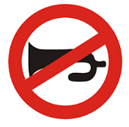 |
| |
1. Roundabout Ahead |
2. No horn |
| |
3. No passing |
4. No parking |
| |
|
|
27. 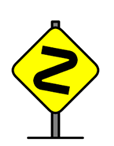 |
| |
1. Crossroads |
2. Narrow Bridge |
| |
3. Dangerous Bend |
4. Caution Cliff Ahead |
| |
|
|
28. 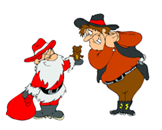 |
| |
1. Mean |
2. Generous |
| |
3. Impulsive |
4. Serious |
| |
|
|
29. 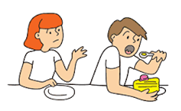 |
| |
1. Generous |
2. Cowardly |
| |
3. Friendly |
4. Selfish |
| |
|
|
30. 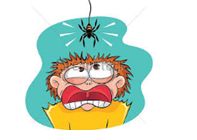 |
| |
1. Cowardly |
2. Aggressive |
| |
3. Stubborn |
4. Brave |
| |
|
|
| Read the passage and answer the following questions. |
In science, a theory is a reasonable explanation of observed events that are related. A theory often involves an imaginary model that helps scientists picture the way an observed event could be produced. A good example of this is found in the kinetic molecular theory, in which gases are pictured as being made up of many small particles that are in constant motion.
A useful theory, in addition to explain past observations, helps to predict events that have not as yet been observed. After a theory has been publicized, scientists design experiments to test the theory. If observations confirm the scientists must search further. There may be a fault in the experiment, or the theory may have to be revised or rejected.
Science involves imagination and creative thinking as well as collecting information and performing experiments. Facts by themselves are not science. As the mathematician Jules Henri Poincare said: "Science is built with facts just as a house is built with bricks, but a collection of facts cannot be called science any more than a pile of bricks can be called a house."
Most scientists start an investigation by finding out what other scientists have learned about a particular problem. After known facts have been gathered, the scientist comes to the part of the investigation that requires considerable imagination. Possible solutions to the problem are formulated. These possible solutions are called hypotheses.
In a way, any hypothesis is a leap into the unknown. It extends the scientist's thinking beyond the known facts. The scientist plans experiments, performs calculations and makes observations to test hypotheses. For without hypotheses, further investigation lacks purpose and direction. When hypotheses are confirmed, they are incorporated into theories. |
| 31. Which of the following is the main subject of the passage? |
| |
1. The importance of models in scientific theories |
2. The place of theory and hypothesis in scientific investigation |
| |
3. The sorts of facts that scientists find most interesting |
4. The ways that scientists perform different types of experiments |
| |
|
|
| 32. The word "this" refers to _______ |
| |
1. a good example |
2. an imaginary model |
| |
3. an observed event |
4. the kinetic molecular theory |
| |
|
|
| 33. According to the second paragraph, a useful theory is one that helps scientists to _____ |
| |
1. make predictions |
2. observe events |
| |
3. publicize new findings |
4. find errors in past experiments |
| |
|
|
| 34. Bricks are mentioned in lines 14-16 to indicate how _________ |
| |
1. mathematicians approach science |
2. building a house is like performing experiments |
| |
3. science is more than a collection of facts |
4. scientific experiments have led to improved technology |
| |
|
|
| 35. The word "considerable" is closest in meaning to _______ |
| |
1. visual |
2. public |
| |
3. great |
4. historical |
| |
|
|
| 36. In the fourth paragraph, the author implies that imagination is most important to scientists when they _______ |
| |
1. gather known facts |
2. close an investigation |
| |
3. evaluate previous work on a problem |
4. formulate possible solutions to a problem |
| |
|
|
| 37. In line 21, the author refers to a hypothesis as "a leap into the unknown" in order to show that hypotheses _______. |
| |
1. go beyond available facts |
2. are sometimes ill-conceived |
| |
3. require effort to formulate |
4. can lead to dangerous results |
| |
|
|
| 38. In the last paragraph, the author implies that a major function of hypotheses is to ________ |
| |
1. investigate known facts |
2. provide direction for scientific research |
| |
3. link together different theories |
4. communicate a scientist's thoughts to others |
| |
|
|
| 39. The word "incorporated" is closest in meaning to _____ |
| |
1. proposed |
2. predicted |
| |
3. constructed |
4. included |
| |
|
|
| 40. Which of the following statement is supported by the passage? |
| |
1. Theories are simply imaginary models of past events |
2. It is better to revise a hypothesis than to reject it |
| |
3. A scientist's most difficult task is testing hypotheses |
4. A good scientist needs to be creative |
| |
|
|